Our Research
AI for Restaurant Industry!
(Complete Guide)
Introduction
The restaurant industry is undergoing a massive shift.
Rising labor costs, inconsistent service, order delays, and operational inefficiencies are eating into margins — even for high-performing brands.
This is where Artificial Intelligence (AI) is changing the game. From automating kitchen workflows to predicting demand and reducing wait times, AI is no longer optional — it’s becoming the backbone of modern restaurant operations.
In this guide, we break down exactly how AI is transforming the restaurant industry, where it delivers the most ROI, and how restaurant operators can implement it effectively.
What is AI in the Restaurant Industry?
Artificial Intelligence in restaurants refers to the use of data-driven systems that can:
- Analyze customer behavior
- Predict demand patterns
- Automate operations
- Optimize decision-making in real time
Unlike traditional software, AI systems continuously learn and improve, making them far more effective in dynamic, high-pressure environments like restaurants.
Why Restaurants Are Rapidly Adopting AI
Restaurants today face 4 major problems:
1. Operational Inefficiency
Tables stay open while customers wait. Staff coordination breaks during peak hours.
2. Labor Costs
Hiring, training, and retaining staff is expensive and inconsistent.
3. Customer Experience Gaps
Long wait times, incorrect orders, and poor communication lead to negative reviews.
4. Revenue Leakage
Even small inefficiencies can result in $50k–$100k+ monthly losses for multi-location restaurants.
👉 AI directly targets these issues.
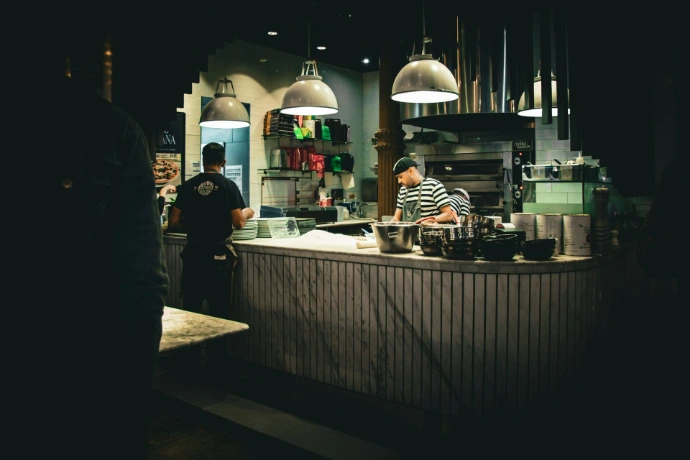

How to Implement AI in Your Restaurant!
Step 1: Identify Revenue Leakage Points
Look at:
- Wait times
- Table turnover
- Order delays
Step 2: Start with One High-Impact Area
Don’t automate everything at once.
Start with:
- Kitchen coordination
OR
- Customer interaction
Step 3: Use AI as Augmentation, Not Replacement
AI should assist your team — not create chaos.
Step 4: Work with a Specialized AI Agency
Generic AI solutions fail in restaurants.
You need a partner that understands:
- Restaurant workflows
- Peak-hour dynamics
- Operational bottlenecks
Why Generic AI Solutions Fail in Restaurants
Most AI tools are:
- Built for general businesses
- Not designed for real-time restaurant pressure
This leads to:
- Poor adoption
- Confusion among staff
- No measurable ROI
Restaurants need industry-specific AI systems
The Future of AI in the Restaurant Industry!
In the next 3–5 years:
- AI will manage entire operations dashboards
- Predict customer flow with near accuracy
- Automate 50%+ of repetitive tasks
Restaurants that adopt early will dominate their markets.
Conclusion
AI is no longer a competitive advantage — it’s becoming a necessity.
Restaurants that continue relying solely on manual operations will struggle with rising costs and inefficiencies.
Those that adopt AI strategically will unlock:
- Higher revenue
- Better customer experiences
- Scalable operations